The Meditation App That Works When You're Too Stressed to Meditate
Picture this:
You've got a strategy meeting in 20 minutes.
The kind where leadership is finally hearing you out.
But you've been in back-to-back calls since 9 AM. Your brain feels like TV static. You're staring at the same slide deck for the third time, and words are starting to blur together.
You know you're not sharp right now, but there's no time to reset, and you just gotta push through and hope for the best.
The meeting happens. You show up, you contribute... but you're a half-step slow.
You miss an obvious connection, and someone beats you to the point you've been prepping to make for the past week.
Later that day: "Damn, I should've been better in that meeting."
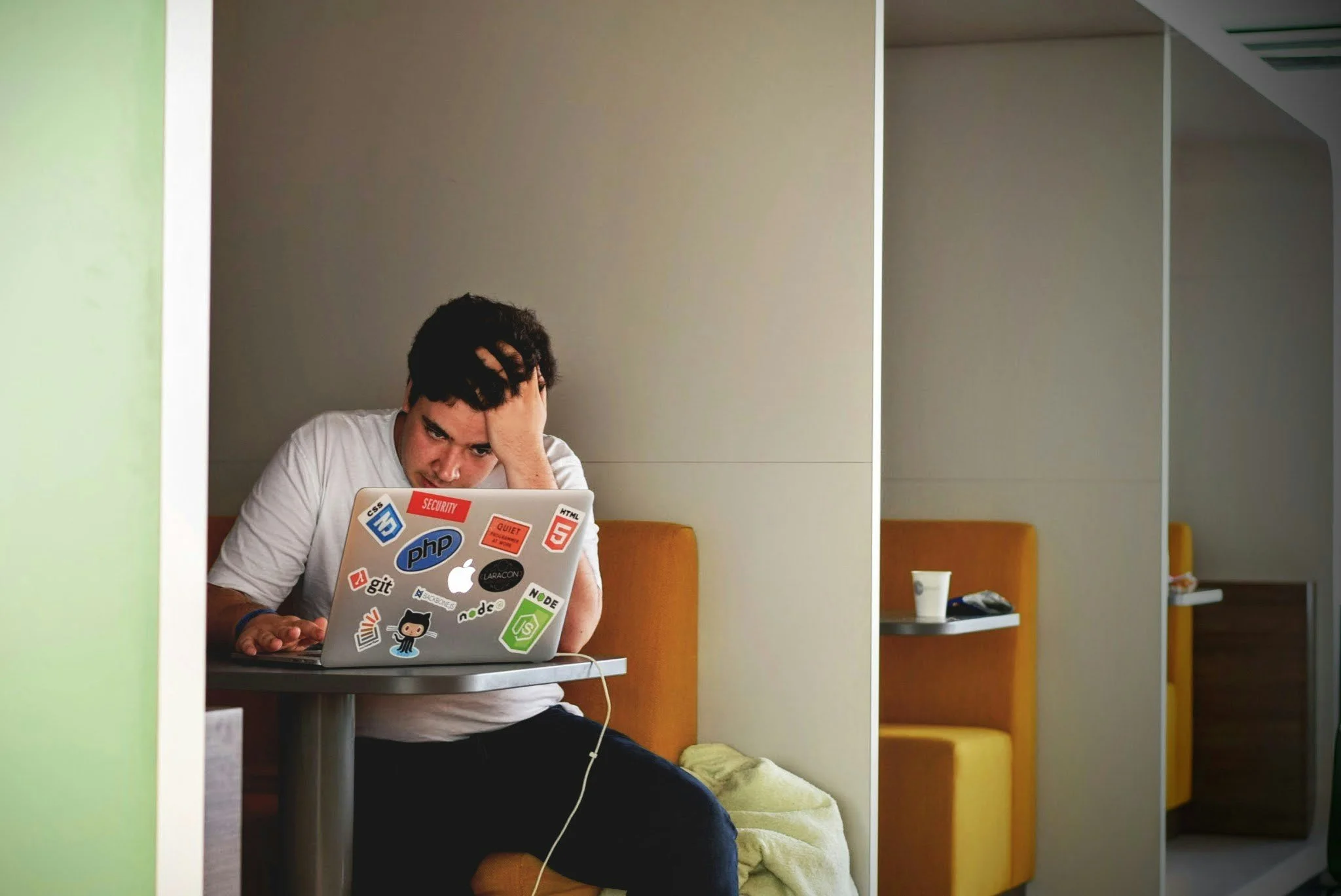
So what's going on here?
Your working memory is shot.
That's the thing that lets you hold multiple ideas at once and connect dots in real-time. When it's fried, you're running on half your brainpower.
And here's the kicker: the higher the stakes, the worse it gets.
If you've been googling "what are the benefits of meditation" or "how to start a meditation routine," you already suspect meditation might help. And you're right, but probably not for the reasons you think.
Here's what meditation does for your performance, and why you still can't seem to make it stick even though you know it works.
What Meditation Does for Performance
Let's talk about what the research shows (and we mean peer-reviewed, published-in-legit-journals research, not wellness blog speculation).
It helps your memory:
There's a 2013 study in Psychological Science that tracked people who did just two weeks of mindfulness training. The results? Their GRE scores went up, their working memory improved, and they stopped zoning out during complex tasks (Mrazek et al., 2013). We're talking an average 16 percentile-point boost on standardized tests.
Working memory is what lets you hold multiple ideas in your head, connect dots in real-time, and not lose the thread halfway through a complicated problem. When your working memory is fried, you're that person re-reading the same paragraph five times.
Your actual brain structure changes:
Researchers at Harvard Medical School and Mass General Hospital scanned people's brains before and after an 8-week meditation program. They found increased gray matter in the hippocampus, the part of your brain that handles learning, memory, and not losing your cool under pressure (Hölzel et al., 2011). People practiced for about 27 minutes a day.
They also found decreased density in the amygdala (your brain's panic button), which lined up with people reporting they felt less stressed.
The Real Problem: Your Brain Won't Let You Start
Okay, so if meditation demonstrably makes your brain work better, why does everyone quit after like three days?
Hyperbolic discounting. (Stay with us, this is important.)
This is well documented in behavioral economics. Basically, your brain values something you can have right now way more heavily than the exact same thing in the future, way more than makes logical sense.
Researcher George Ainslie demonstrated this with a simple experiment:
People preferred $50 immediately over $100 in six months.
But when asked if they'd prefer $50 in six months or $100 in seven months? They picked the $100. Same time gap.
Totally different choice (Ainslie, 1992).
Here's how this kills your meditation habit:
It's 7 AM. You've got 10 minutes before your day explodes. You know that 10 minutes of meditation will set you up for a better day ahead.
But instead, you open your phone, and your inbox calls to you.
You clear three emails, which gives you that little dopamine ping immediately.
Your brain does the math: "Small reward RIGHT NOW beats bigger reward in 8 hours." And the immediate reward wins. Every. Single. Time.
This isn't a discipline problem despite health gurus telling you to ‘increase your willpower’. It’s just how your neurology works.
And here's where most meditation apps completely fail you: they're designed around future benefits. "Build a practice!" "Long-term wellness!" "Stick with it for 8 weeks!" That's like designing a weight loss program for people who already love the gym.
How Headspace Makes It Easier
Disclosure: We have an affiliate partnership with Headspace. Using our links earns us a commission and helps us keep creating free resources.
If you've tried meditation before and it didn't stick, it's probably not because you suck at discipline. It's because the app was fighting against how your brain is wired.
Headspace handles this differently:
It drops the barrier when you need it most
You know when you most need meditation? Right before that big meeting, when you're already stressed and scattered.
You know when a 20-minute meditation session feels completely impossible? Right before that big meeting, when you're already stressed and scattered.
Headspace has 3-minute sessions you can use when you need a quick reset. They're organized by what you're actually feeling: focus, stress, anxiety, etc.
Three minutes. That's it. Your brain can handle choosing 3 minutes over inbox-clearing when the barrier is that low. And three minutes is actually enough to shift your mental state before something important.
It has "SOS" sessions for when you're panicking
When you're in a moment of high stress or anxiety, Headspace has specific SOS meditations designed for exactly that situation. Quick sessions when you need immediate help, not a long-term wellness plan.
Why We Use It
We use Headspace because it meets you where you actually are—stressed, short on time, and needing something right now instead of assuming you'll power through with discipline you don't have.
A Few Last Notes
Meditation measurably improves performance — working memory, attention, emotional regulation, and decision-making under pressure. This isn't woo-woo; it's in peer-reviewed journals (Mrazek et al., 2013; Hölzel et al., 2011; Jha et al., 2007).
The problem isn't that you don't know this works — it's that your brain is wired to prioritize immediate rewards over delayed ones, even when the delayed reward is objectively better (Ainslie, 1992).
Most meditation apps ignore this completely — they assume willpower will bridge the gap between "I know this is good for me" and "I'll actually do it consistently."
What actually works — lowering the barrier so much that even your stressed, distracted brain can choose 3 minutes of meditation over your inbox.
If you're tired of knowing meditation would help but never actually doing it, try Headspace.
A short 3-minute go before your next big meeting. See what happens.
References:
Ainslie, G. (1992). Picoeconomics: The strategic interaction of successive motivational states within the person. Cambridge University Press.
Ainslie, G., & Haslam, N. (1992). Hyperbolic discounting. In G. Loewenstein & J. Elster (Eds.), Choice over time (pp. 57-92). Russell Sage Foundation.
Hölzel, B. K., Carmody, J., Vangel, M., Congleton, C., Yerramsetti, S. M., Gard, T., & Lazar, S. W. (2011). Mindfulness practice leads to increases in regional brain gray matter density. Psychiatry Research: Neuroimaging, 191(1), 36-43.
Jha, A. P., Krompinger, J., & Baime, M. J. (2007). Mindfulness training modifies subsystems of attention. Cognitive, Affective, & Behavioral Neuroscience, 7(2), 109-119.
Mrazek, M. D., Franklin, M. S., Phillips, D. T., Baird, B., & Schooler, J. W. (2013). Mindfulness training improves working memory capacity and GRE performance while reducing mind wandering. Psychological Science, 24(5), 776-781.